
1. Focus on the Preferred Future.
Solution-Focused Practice starts with where people want to go, rather than with an extensive analysis of what went wrong. By exploring the preferred future, people begin to describe what they hope will be different and what meaningful change would look like in everyday life.
These conversations help make hopes and possibilities more concrete. They create direction without prescribing the route. The professional listens carefully, asks questions, and helps people discover their own picture of a better future — one that is meaningful, realistic, and uniquely theirs.
2. Build on What Already Works.
Solution-Focused Practice pays close attention to what is already working. Even when people are facing difficult situations, there are often moments when things go a little better, when the problem is less present, or when they manage to respond differently.
Exploring these exceptions can reveal strengths, skills, resources, and successful strategies that might otherwise go unnoticed. Rather than starting from scratch, we build on what people are already doing well. Small successes become valuable clues — and often provide a practical starting point for further change.
3. People Have Strengths and Resources.
Solution-Focused Practice starts from the belief that people have strengths, resources, and abilities that can help them move forward. These may come from past experiences, personal qualities, relationships, skills, or ways they have successfully dealt with challenges before.
Sometimes these resources are easy to recognize; other times, they become hidden behind problems or setbacks. Solution-Focused conversations help bring them back into view. By recognizing what people already know and can do, confidence can grow, and new possibilities for change can emerge.
4. Small Steps Can Make a Big Difference .
Change does not always require big solutions or dramatic breakthroughs. In Solution-Focused Practice, even a small step in the right direction can make an important difference. Small changes are often easier to recognize, achieve, and build upon.
They can increase confidence, create momentum, and open the door to further possibilities. By noticing signs of progress and exploring what helped to make them happen, people can discover their own way forward. Over time, a series of small steps can lead to meaningful and lasting change.
5. Language Creates Possibilities .
The words we use and the questions we ask can influence what people notice, imagine, and believe is possible. Solution-Focused Practice uses language to explore strengths, hopes, progress, and possibilities rather than allowing problems to dominate the conversation.
Carefully chosen questions can invite people to see their situation from a different perspective and discover options that may not have been visible before. Conversations become a place where new ideas can emerge and preferred futures can begin to take shape. In this way, language is not only a way of describing change — it can also become part of creating it.
6. Collaboration Rather Than Expertise .
Solution-Focused Practice is built on collaboration. Professionals bring their knowledge, experience, and conversational skills, while people bring expertise about their own lives, circumstances, values, and hopes for the future.
Rather than assuming we know what is best for someone, we work together to discover what might be useful and what fits their unique situation. This creates a relationship based on respect, equality, and shared responsibility. Change is not something the professional does to another person—it develops through conversation, curiosity, and collaboration.
7. Respect, Curiosity and Not-Knowing .
Solution-Focused Practice invites professionals to approach people with respect, genuine curiosity, and a willingness not to assume too quickly that they know what something means. A not-knowing stance does not mean having no expertise; it means remaining open to the other person’s perspective, experience, and understanding of their situation.
Instead of interpreting or providing answers too quickly, we listen carefully and ask questions that invite reflection and discovery. This creates space for people to find their own meanings, ideas, and possibilities. Curiosity becomes a way of showing respect—and a powerful starting point for meaningful conversation.

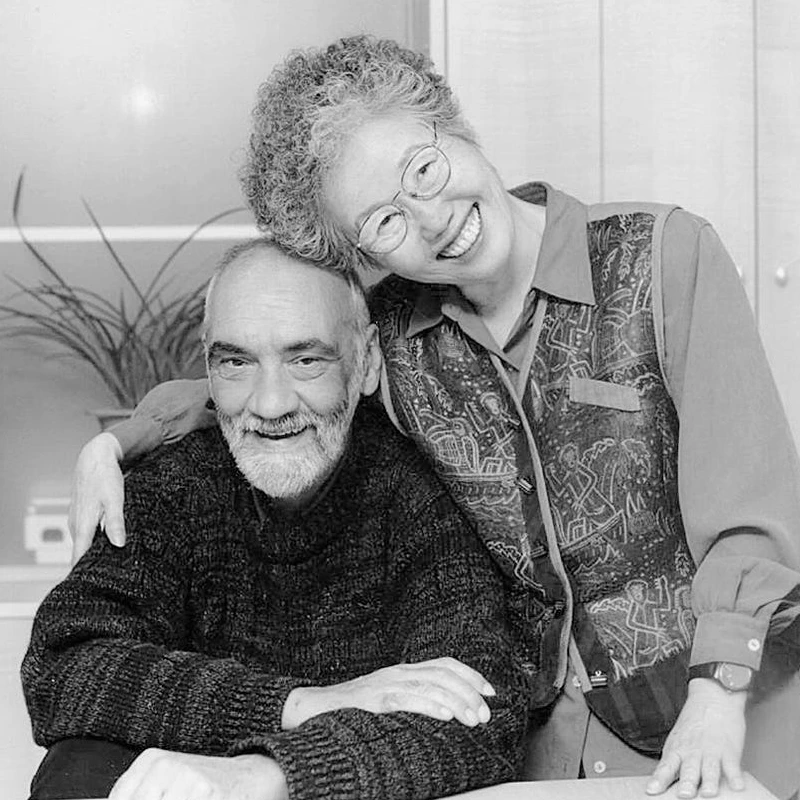
Steve de Shazer & Insoo Kim Berg.
The Solution-Focused approach was developed in the late 1970s and 1980s by Steve de Shazer, Insoo Kim Berg, and their colleagues at the Brief Family Therapy Center in Milwaukee, USA. Their work introduced a different way of thinking about therapy, change, and professional conversations.
Rather than focusing primarily on the causes of problems, diagnoses, or deficits, they became increasingly interested in what people wanted instead, what was already working, and how small signs of progress could be recognised and strengthened.
This simple but powerful shift in attention helped shape what became known as Solution-Focused Brief Therapy (SFBT). Over the years, their ideas travelled far beyond the therapy room and inspired professionals around the world.
Today, Solution-Focused principles are applied in many different fields, including:
Our Vision at Solutions Centre.
At Solutions Centre, we believe that meaningful learning happens through interaction, curiosity, reflection, and practical experience.
Our programmes bring theory to life through live demonstrations, real cases, conversations, exercises, and opportunities to practise. Participants are invited not simply to learn about the Solution-Focused approach, but to experience it, try it out, and discover what works for them.
We see learning as a collaborative process. Trainers and participants bring their own knowledge, experience, questions, and perspectives into the room. This creates an open and engaging learning environment in which people learn with and from one another.
Our aim is that participants leave not only with new knowledge, but with greater confidence, practical skills, fresh ideas, and conversations they can use the very next day.
Ready to Experience the Solution-Focused Approach?
Discover how Solution-Focused thinking can strengthen communication, collaboration and professional development within your organisation or practice.
Our team is happy to answer your questions and help you explore which approach or learning experience best matches your professional goals and interests.
For more information you can contact us using the contact form below, send us an email or reach out by phone.