
SFADS: reflecting on the working alliance
How do you know whether a conversation feels collaborative? And what could you notice when that collaboration needs more attention? SFADS offers practitioners a structured way to reflect.
In Solution-Focused Practice, the quality of the working relationship matters throughout the conversation. A practitioner and client may be discussing useful goals, while still experiencing their connection or shared direction differently. Taking time to reflect on those dynamics can open up valuable questions for professional learning.
The Solution-Focused Alliance Dynamic Scale (SFADS) was developed as a reflective tool for exploring the therapeutic alliance within a solution-focused framework. Its practitioner pilot version invites reflection on ten dimensions of collaboration.

Looking beyond a single impression
A session can leave a practitioner with a general feeling that it went well or that something was missing. SFADS encourages a closer look. Its dimensions include rapport, agreement about goals, the client’s sense of agency and the client’s perception of progress. It also invites attention to language, differences between people, social support and the practitioner’s belief in the client.
Together, these perspectives can help a practitioner describe what they noticed and consider what may be worth exploring further. The purpose is reflection and learning, not a verdict on the practitioner or the client.
A question behind the score
In the practitioner version, each dimension is rated on a scale from 0 to 10. The number is accompanied by a prompt to describe what happened in the session that supports the rating. That second step matters: it connects an impression to something observable and makes the reflection more useful in supervision, peer consultation or training.
A lower rating can invite curiosity. Was the goal clear to both people? Did the client have room to express what mattered to them? Were there moments when their own abilities or progress became visible? These are questions to explore with care, rather than assumptions to make on the client’s behalf.
Supporting reflective practice
SFADS can help practitioners notice how collaboration develops across sessions and identify aspects they want to discuss with colleagues or supervisors. The pilot materials also include a client reflection form, creating an opportunity to consider perspectives alongside one another.
The available materials are intended for educational and research use. Practitioners should handle session information with appropriate confidentiality and use the tool within their professional context.
Curious about SFADS? Explore our Methods and view the available Downloads to learn more about the pilot materials.
Our three latest blog posts

SFADS: reflecting on the working alliance
Learn how SFADS supports reflection on connection, shared direction, agency and progress in solution-focused professional practice.
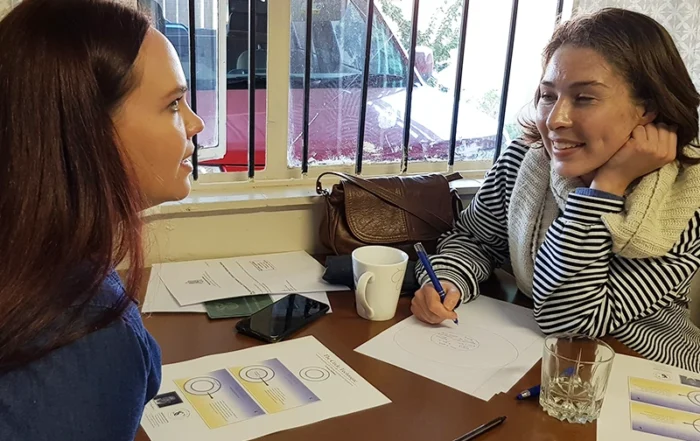
The Circle Technique: Strengths and Desired Change
Discover how the Circle Technique helps professionals explore existing strengths and desired change in a clear, visual conversation.
Solution-Focused World Conference 2027: bringing ideas into practice
On 2 and 3 April 2027, professionals from around the world will gather in Amsterdam for two days of solution-focused learning and exchange. Discover what Solution V has in store.